Curtis Collicutt
Outcome Oriented Technologist, Sales Engineer, and Cybersecurity Expert
Catalogue
Browse all software and books with search and filtering.
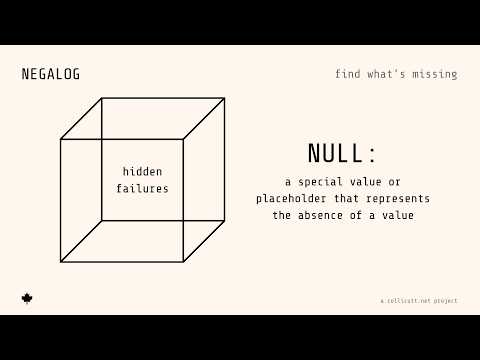
Introducing NegaLog
An introduction to NegaLog, the tool that finds the logs that should exist but don't.
NegaLog Watch
NegaLog Watch turns batch analysis into continuous monitoring. It tails your log files, evaluates rules in real time, persists state across restarts, and deduplicates alerts so you don't get paged twice for the same problem.
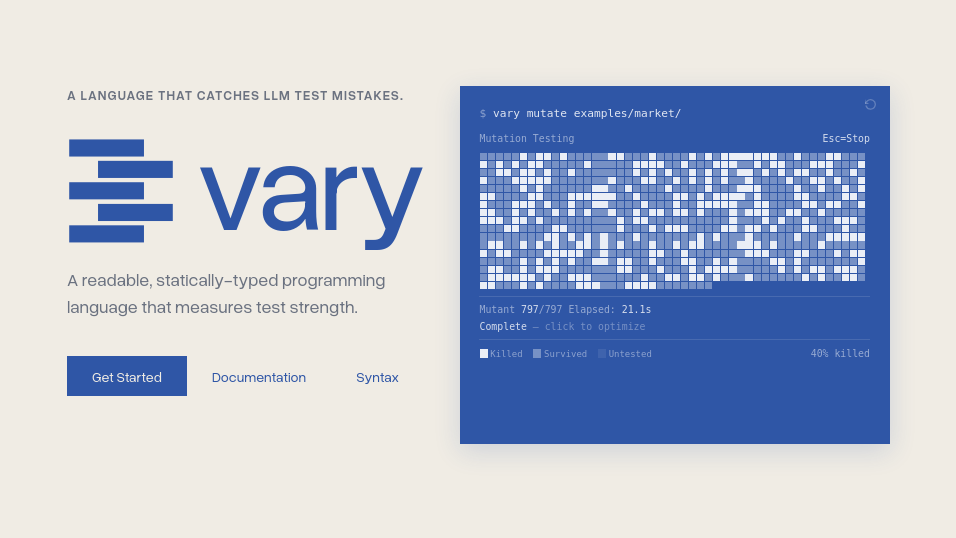
Vary
Vary is a statically-typed language that compiles to JVM bytecode. Clean syntax, type inference, null safety at compile time, no semicolons. The compiler has mutation testing built in: it flips bytecode instructions and checks whether your tests notice. If they don't, those tests were never protecting you. One CLI binary handles running, checking, testing, formatting, and mutating. Nothing extra to install.
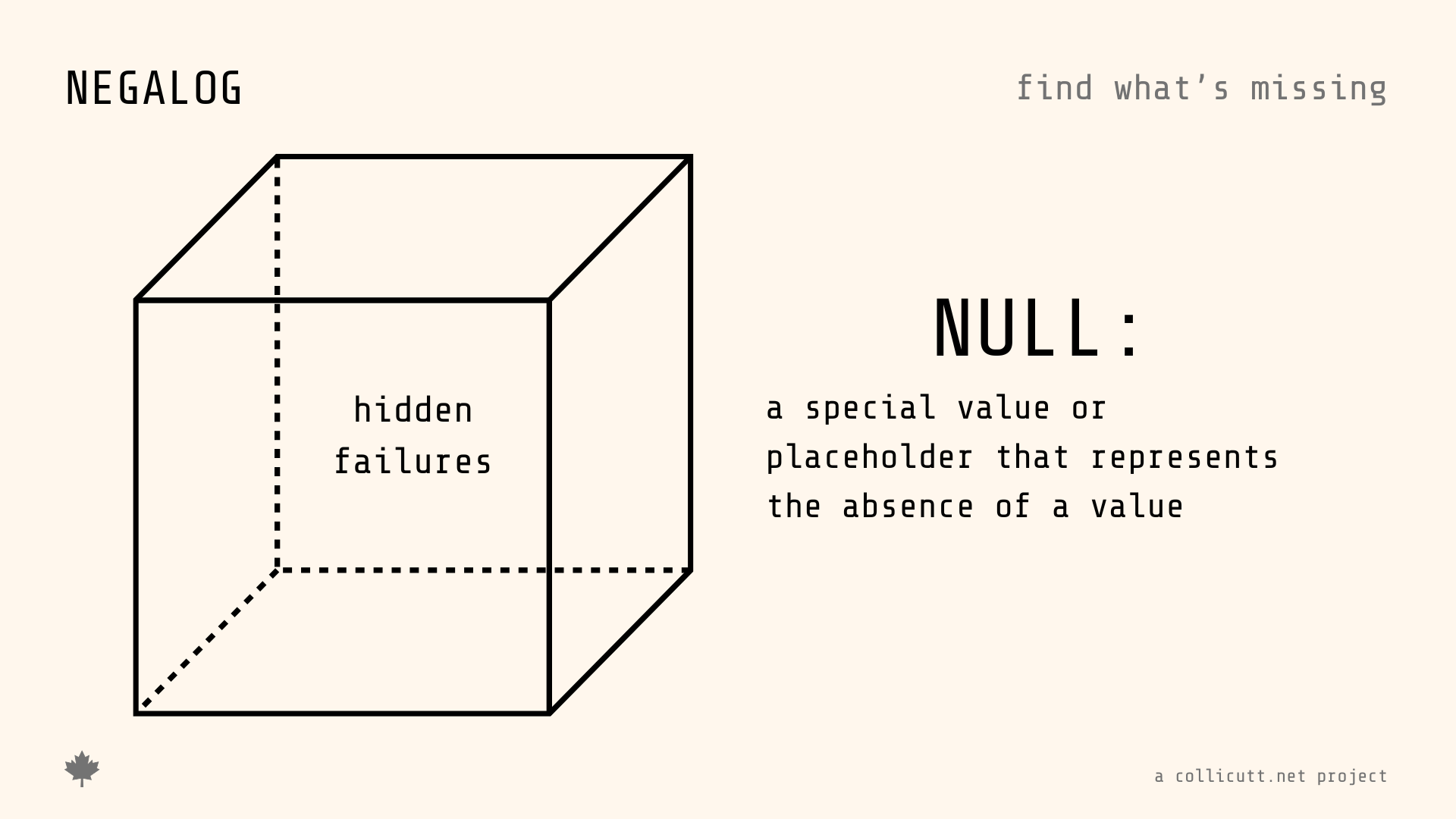
NegaLog
Log analysis tools search for patterns that exist. NegaLog does the opposite: you define what logs should appear, and it tells you what's missing. A Go CLI that handles sequence detection, periodic monitoring, and conditional absence checks across multiple log files.
MCP Makefile Server
A Model Context Protocol server that provides makefile target inspection and execution capabilities for AI assistants.

raillock
A cybersecurity CLI tool and Python library for checksumming Model Context Protocol tools and securing your agents against prompt injection attacks.
Safeline
A Python framework for building safety-critical operations with arbitrary stage pipelines, audit trails, locking, and approval workflows.
emoji-sad
A CLI tool that recursively searches through directories to find and remove all emojis from text files. Useful for testing AI-assisted coding tools.

From Dry-Run to Digital Twins: A Guide to Building Safer Systems
First in a series about operating complex systems without burning out the people who run them. The book introduces a Safety Continuum, a framework for making day-to-day operations safer and more predictable. Our industry has poured effort into uptime and availability but largely ignored the experience of the humans holding everything together at 3AM with brittle, dangerous tools. Safety is not the same thing as availability, and we have been treating it as an afterthought. This volume (and the ones that follow) is about changing that. The tools and practices exist. Operators just need permission to use them.

Go App Template Skeleton
A generic golang application skeleton providing a foundation for building API servers with web interfaces and command-line tools.

plothole
Test your AI-assisted code for missing implementations, TODOs, and other AI generated artifacts
The Stegalographer Guidebook
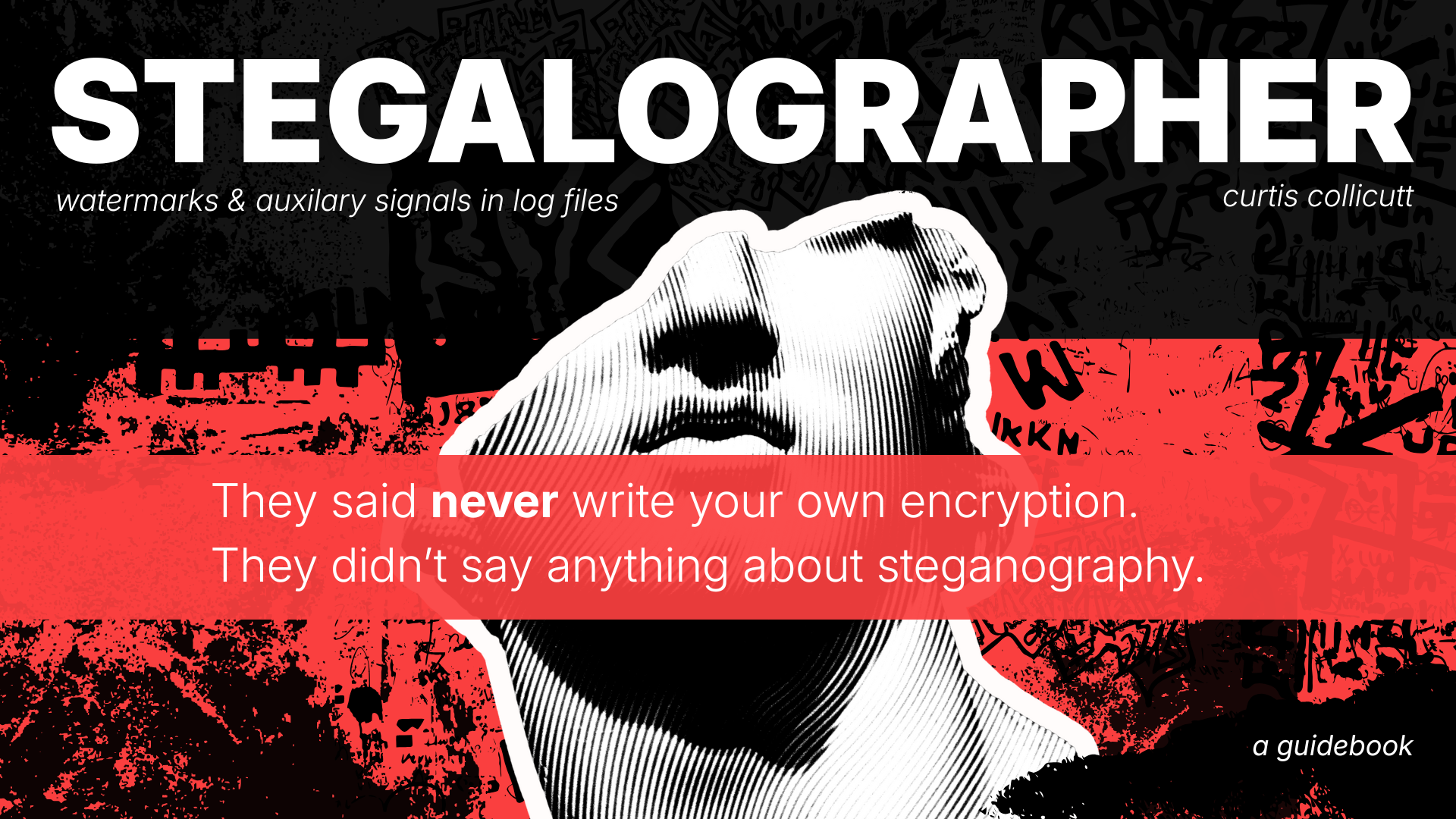
This guidebook covers Stegalographer, the tool, and steganography more broadly. Stegalographer adds watermarks and attribution markers to log files. If your logs already flow through a pipeline, Stegalographer slots into that pipeline and encodes information you can verify later, without disrupting anything visible. Most people think of steganography as hiding messages in images, but the same idea works anywhere you have controllable variation. Distributed infrastructure already produces massive volumes of logs and metrics with natural variation baked in. That variation is a surface you can write on. The security world has spent decades on encryption and availability. Steganography solves a different problem: provenance and attribution. Who produced this data? Has it been tampered with? These questions matter most in democratic and institutional systems, and they are the ones encryption alone cannot answer.
No items match your search criteria.