Curtis Collicutt
Outcome Oriented Technologist, Sales Engineer, and Cybersecurity Expert
Books
Technical books and resources for developers and security professionals.
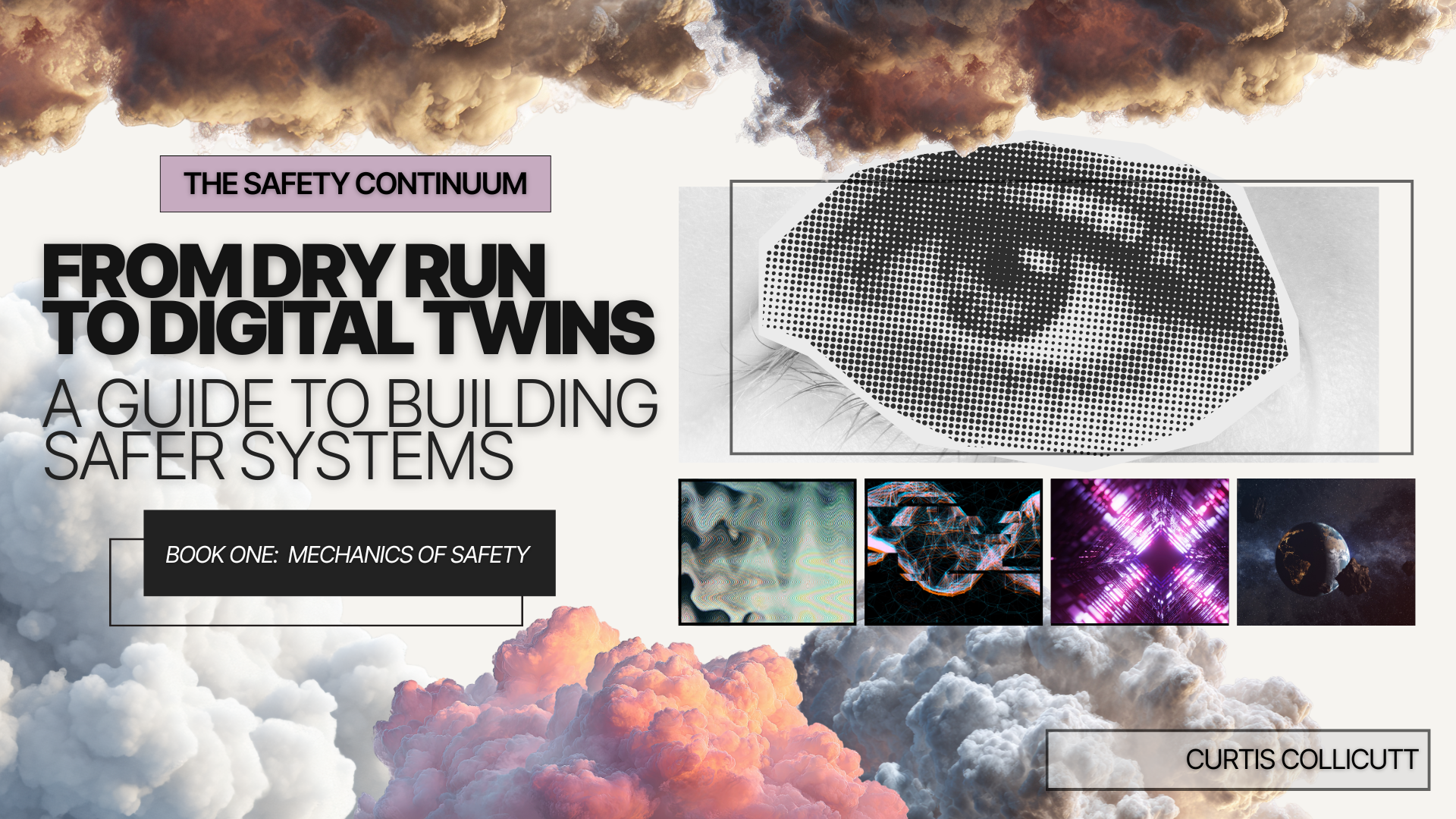
The Safety Continuum
From Dry-Run to Digital Twins: A Guide to Building Safer Systems
Book One - Mechanics of Safety
First in a series about operating complex systems without burning out the people who run them. The book introduces a Safety Continuum, a framework for making day-to-day operations safer and more predictable.
Our industry has poured effort into uptime and availability but largely ignored the experience of the humans holding everything together at 3AM with brittle, dangerous tools. Safety is not the same thing as availability, and we have been treating it as an afterthought.
This volume (and the ones that follow) is about changing that. The tools and practices exist. Operators just need permission to use them.
95 pages ~20,000 words 8.5 x 11 PDF
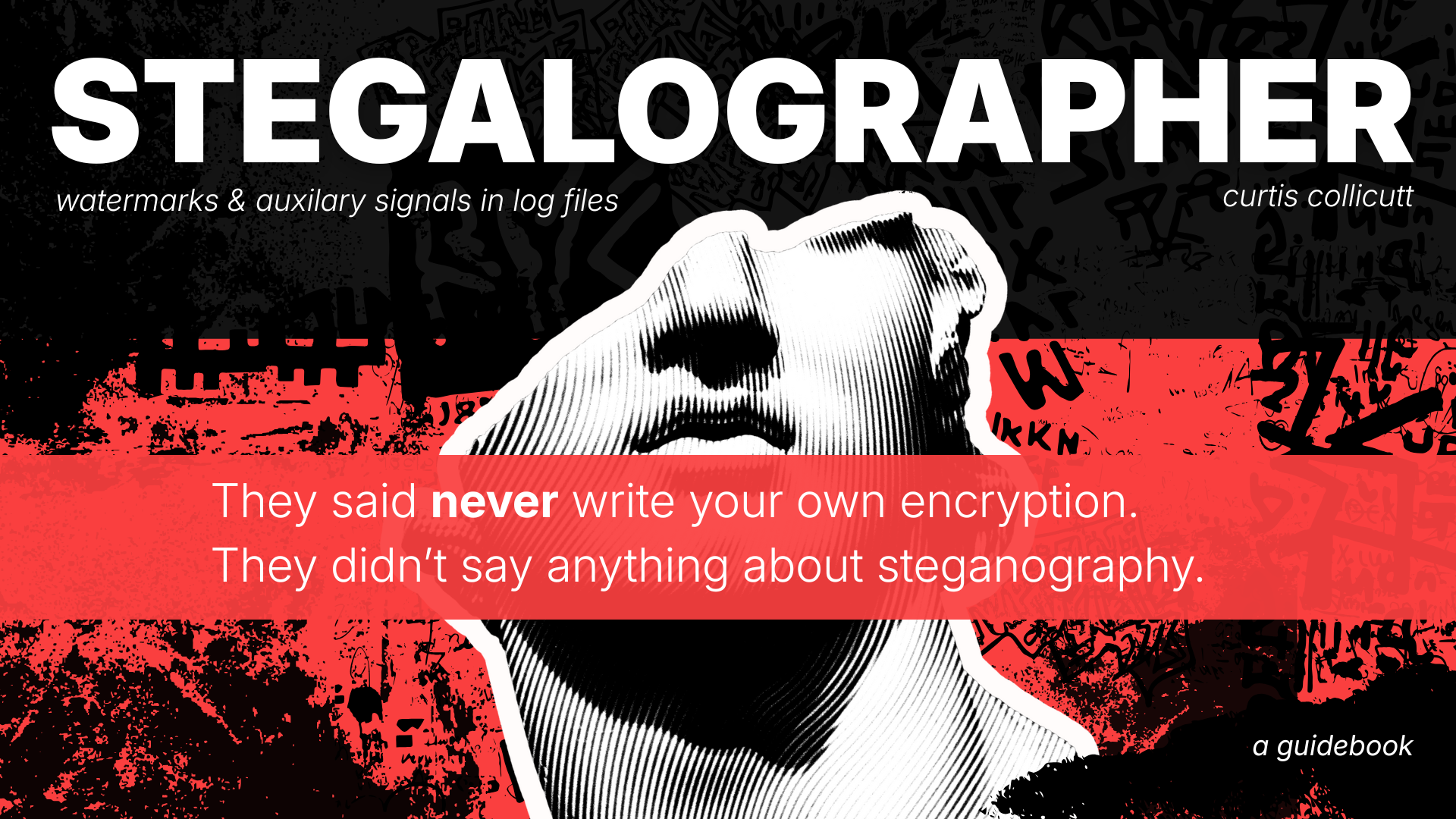
The Stegalographer Guidebook
They said never write your own encryption. They didn't say anything about steganography.
This guidebook covers Stegalographer, the tool, and steganography more broadly.
Stegalographer adds watermarks and attribution markers to log files. If your logs already flow through a pipeline, Stegalographer slots into that pipeline and encodes information you can verify later, without disrupting anything visible.
Most people think of steganography as hiding messages in images, but the same idea works anywhere you have controllable variation. Distributed infrastructure already produces massive volumes of logs and metrics with natural variation baked in. That variation is a surface you can write on.
The security world has spent decades on encryption and availability. Steganography solves a different problem: provenance and attribution. Who produced this data? Has it been tampered with? These questions matter most in democratic and institutional systems, and they are the ones encryption alone cannot answer.
72 pages ~15,000 words 8.5 x 11 PDF
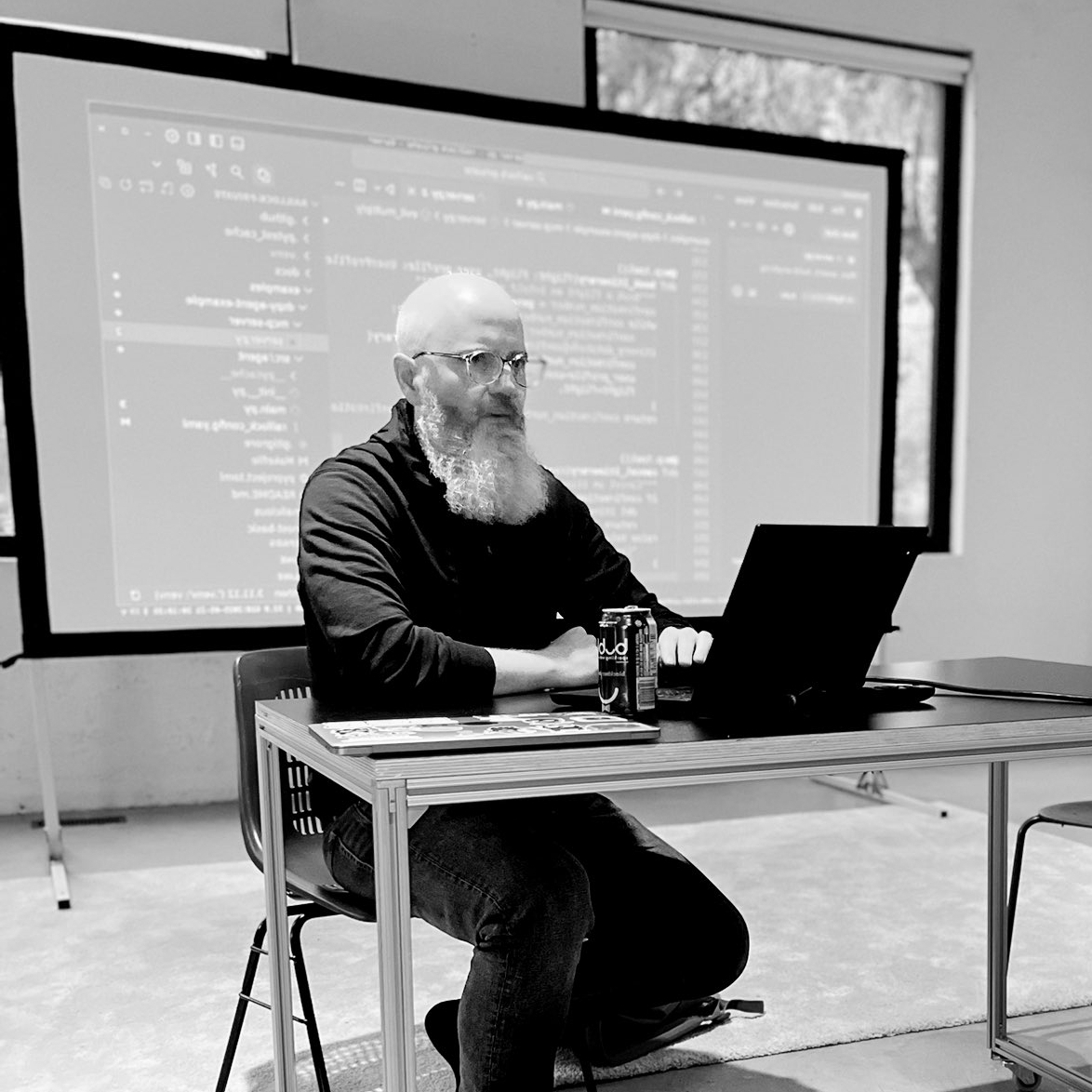
About Curtis
Curtis is a technologist who works to make systems safer and easier to use. He adopts a socio-technical approach to complex challenges via human-centred solutions. Throughout his career, which has spanned work with university libraries, start-ups and enterprises, he has been a trusted advisor to customers and stakeholders. He is constantly learning and growing, and through organisations like TAICO, he helps others do the same.